
By Stem for Tomorrow
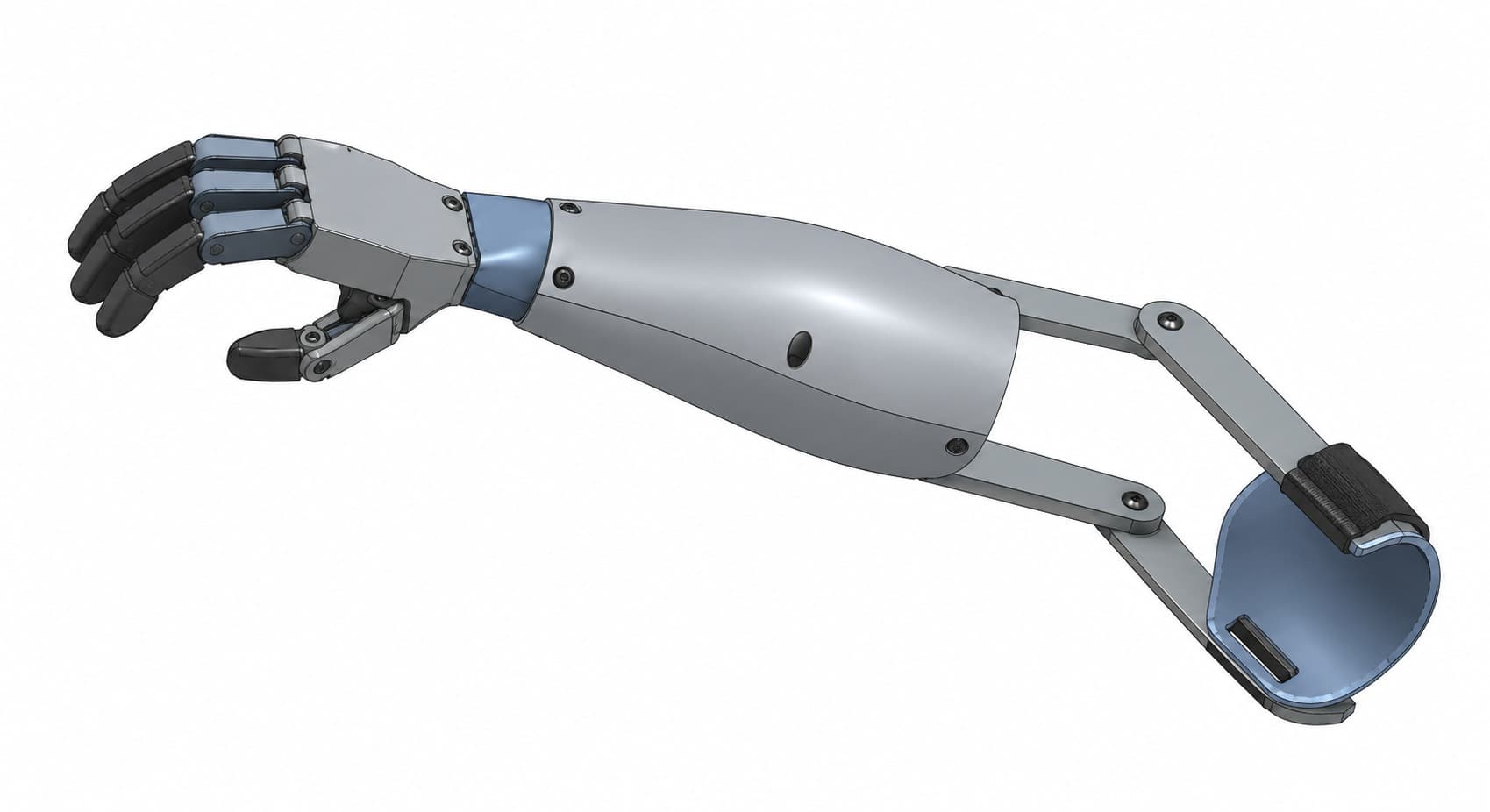
Our prosthetics work started with hands: our own design, printed, refitted, and reprinted until it could hold up to daily wear, then distributed to children in Uganda through the e-NABLE network. This initiative takes that same approach considerably further — full arms, legs, and other appendages, each one custom designed for the person who will actually wear it rather than adapted from a file already circulating online. A limb carries loads a hand never does, so the engineering bar is higher. We're designing around how the body itself works: where a socket meets skin and bone, how weight transfers through a step, how much force a joint has to return, and how a device stays wearable for a child whose measurements will change within the year. Biology-centric design is the difference between a prosthetic that photographs well and one that still gets worn six months later. A printed limb is cheap in materials and expensive in iteration. Filament, sockets, liners, and hardware come to roughly $120 a device, and we're budgeting for about twenty. The rest of the goal covers a dedicated printer, the refits that follow a first fitting, and shipping to the partners who handle fitting and follow-up on the ground.