
By Stem for Tomorrow
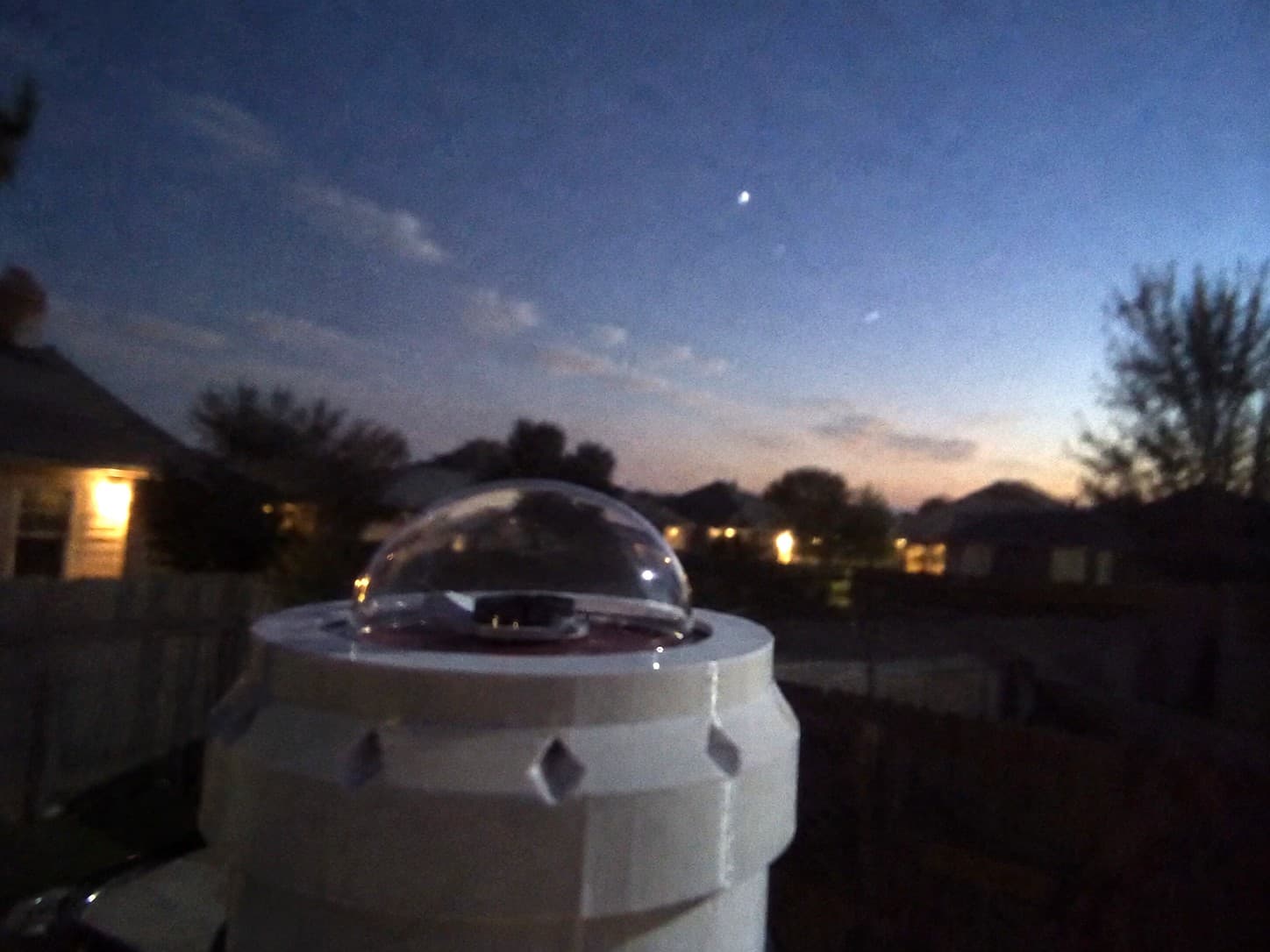
An all-sky camera photographs the whole sky over the course of a night, which is how meteor showers, fireballs, and other passing events get caught on record. Ours is a build we designed to be assembled by a student rather than bought off a shelf: a Raspberry Pi 4 and a wide-angle camera module giving roughly a 120-degree field of view, pointed straight up under a UV-resistant acrylic dome, running on a 5V supply with a microSD card for storage. The parts come to about $115 a station. This goal funds a first batch of twelve, plus international shipping, spare domes and cards, and the shared archive that collects every station's images and hands them back to the students who captured them. We're prioritising regions that have dark skies but little access to astronomy — places like Kenya, Morocco, Indonesia, Chile, Kazakhstan, and small island nations from the Maldives to the Caribbean, where there is almost no light pollution at all. A night recorded in one country sits alongside the same night recorded in another, building a catalogue of the sky assembled entirely by students, from places that rarely appear in astronomical datasets.