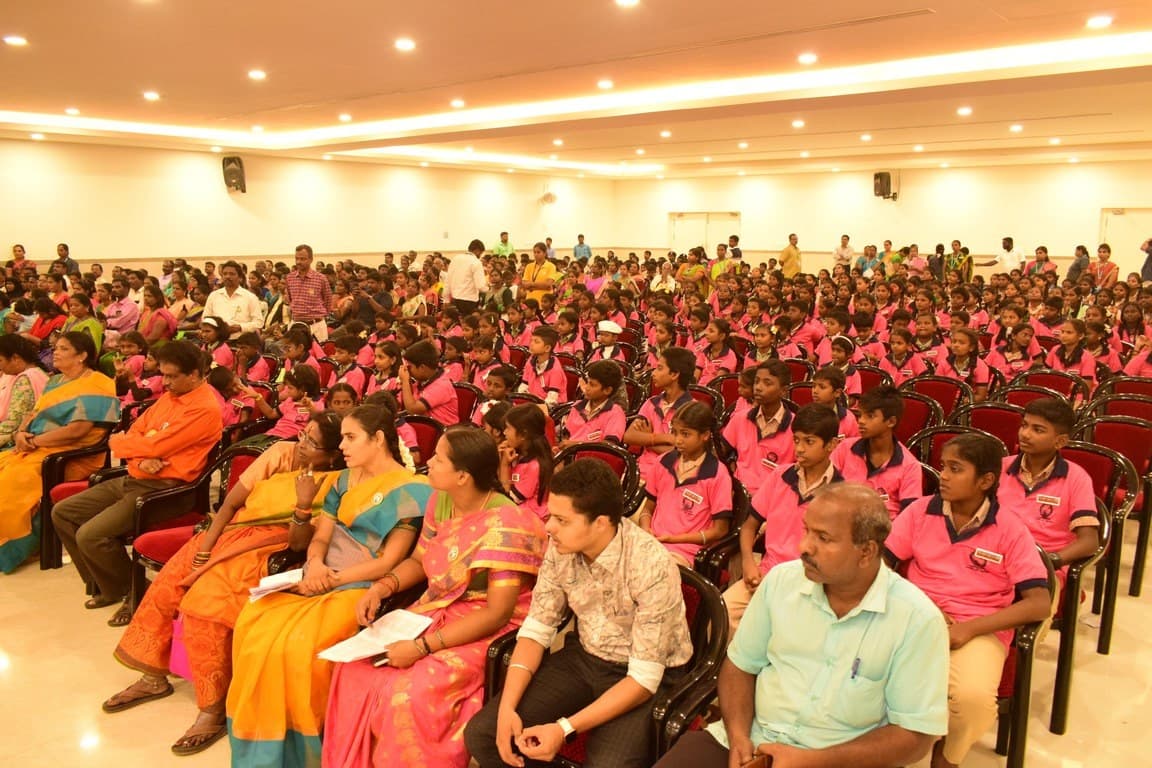

We partnered with Village Technology Schools, an organization with deep, existing relationships in rural Indian communities, to build something larger than anything we'd previously attempted in the region: a STEM awareness event aimed at students who rarely encounter STEM or robotics in any hands-on form. More than five thousand students from five different schools ultimately showed up.
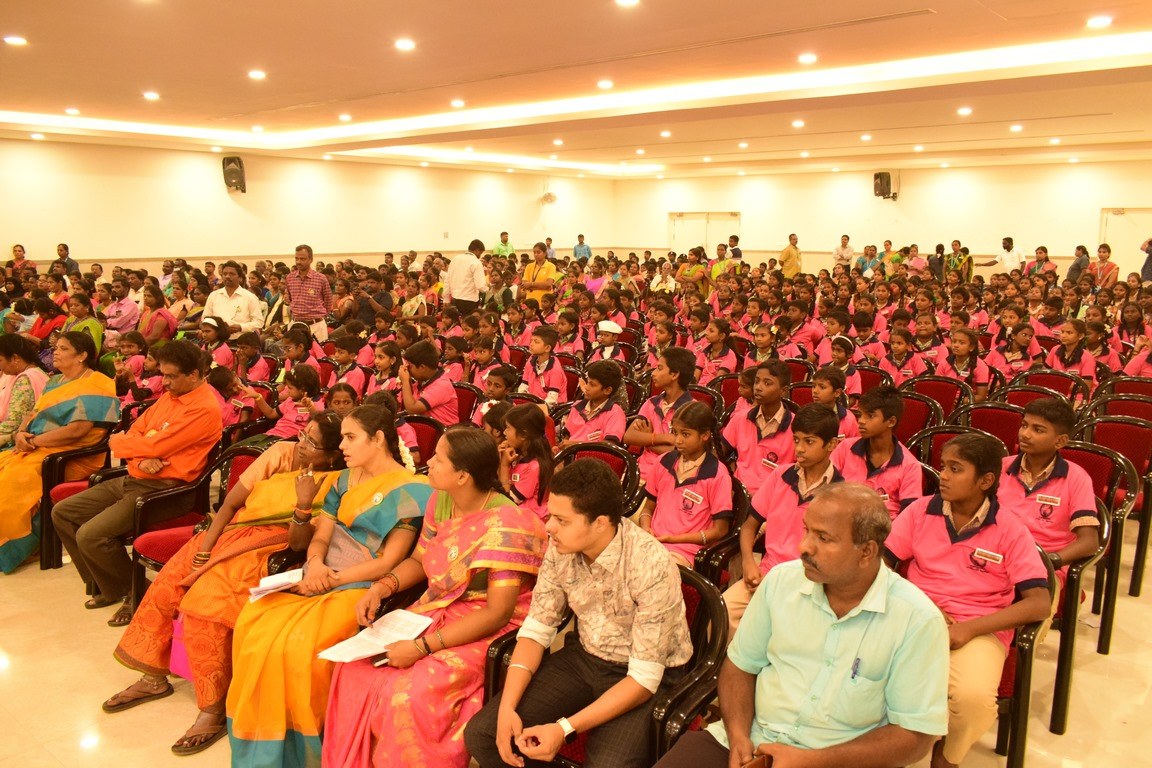 One of the sessions at the awareness event, with students and teachers from the schools VTS works with
VTS brought exactly what we lacked: years of groundwork and local trust that no outside organization could replicate on a reasonable timeline. Designing an ambitious event is one thing; convincing five schools to actually send their students requires the kind of relationship that gets built slowly, over years, which is precisely why partnerships like this one matter as much as the programming itself.
An event of that scale means little if it exists in isolation, so we built infrastructure around it rather than treating the day itself as the finish line. Five makerspaces went up across the areas VTS serves, stocked with twelve 3D printers split among them. We also fully funded two student robotics teams, covering the costs, entry fees, materials, and the equipment itself, that typically keep a promising team from ever reaching a competition floor.
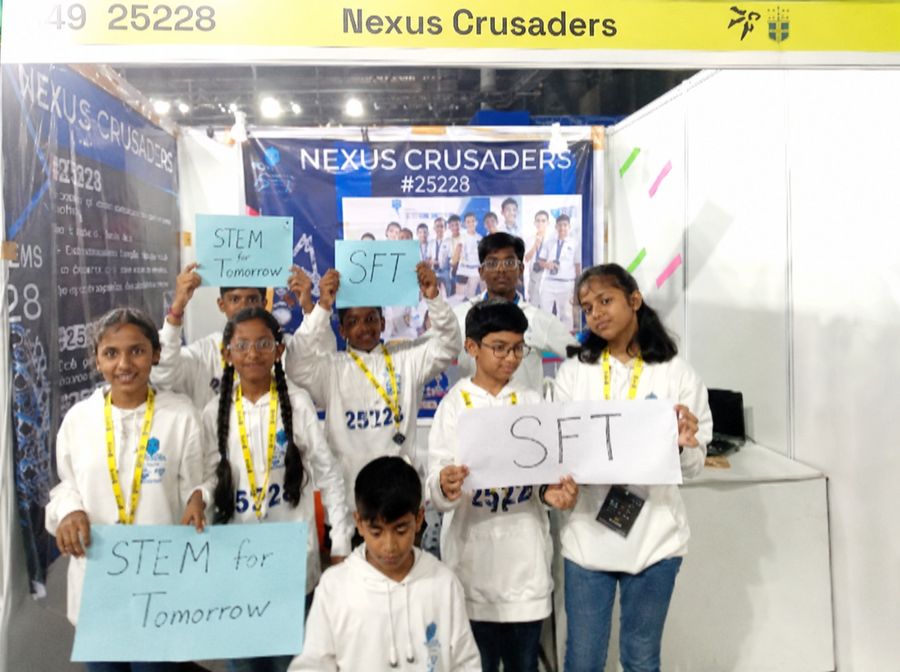 One of the two robotics teams we fully funded, Nexus Crusaders
Five thousand students at a single event represents a genuine surge of exposure, and the five makerspaces are what convert that exposure into something a student can actually act on: real tools, real ongoing support, and a place to keep building long after the event itself has ended and the crowds have gone home.
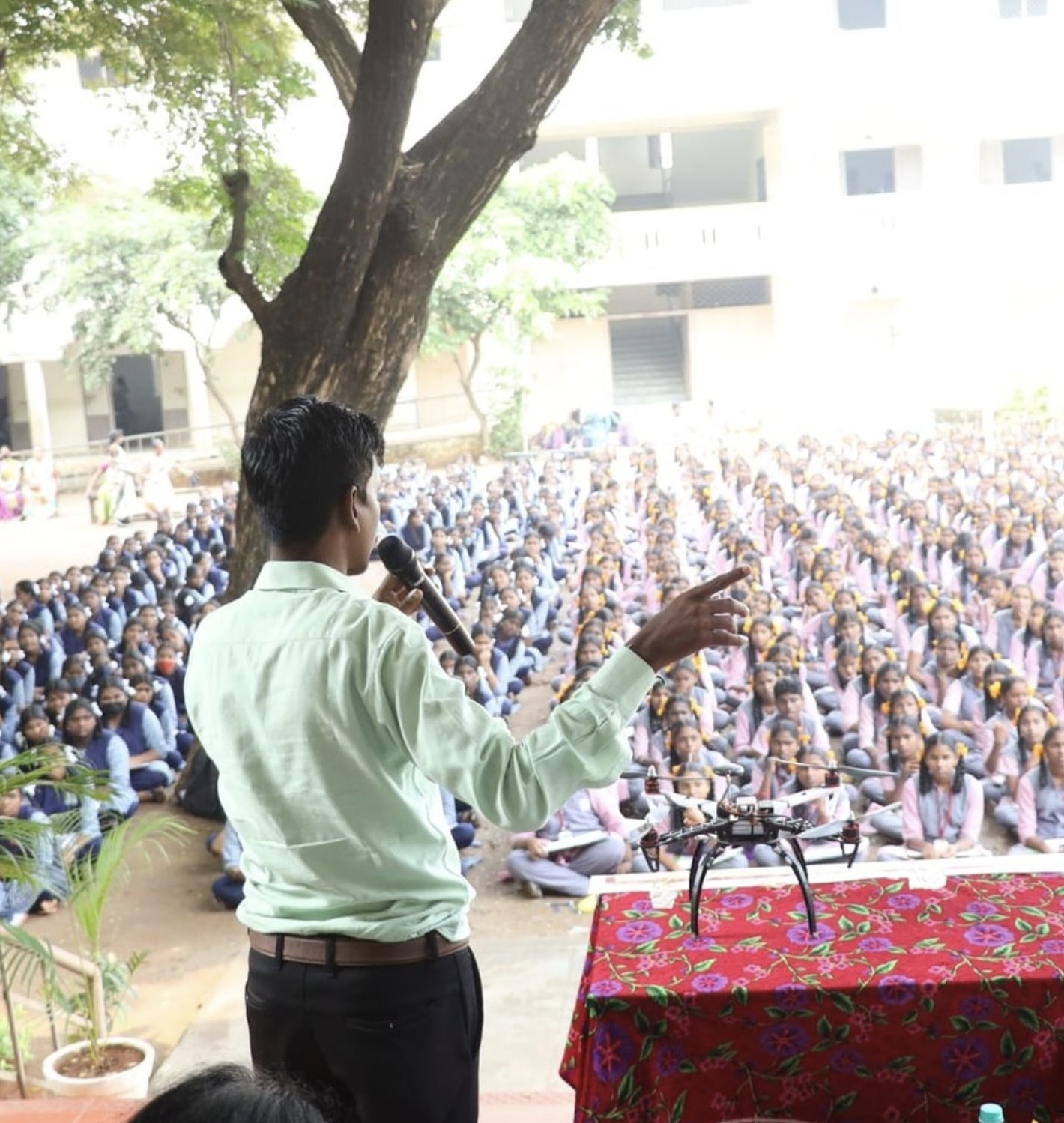 A drone demonstration in front of one of the seated crowds at the event
Funding the two robotics teams came from the same reasoning. Getting a team to a competition takes more than curiosity: parts, entry fees, and equipment all cost real money, and those costs accumulate quickly for a school that never budgeted for a robotics program in the first place. Covering them was the difference between a team that exists in name and one that actually shows up.
This effort builds on smaller work we were already doing in India, including STEM kits sent to individual schools, but it operates at an entirely different scale. A kit reaches one classroom at a time, while an event like this one, paired with five makerspaces and two funded teams, represents an attempt to shift what an entire region of students believes is achievable for them.
We'll have more to report on how the makerspaces and the two robotics teams develop once they've had real time to run, but the event itself, and the five thousand students who showed up for it, is the foundation the rest of this is being built on.