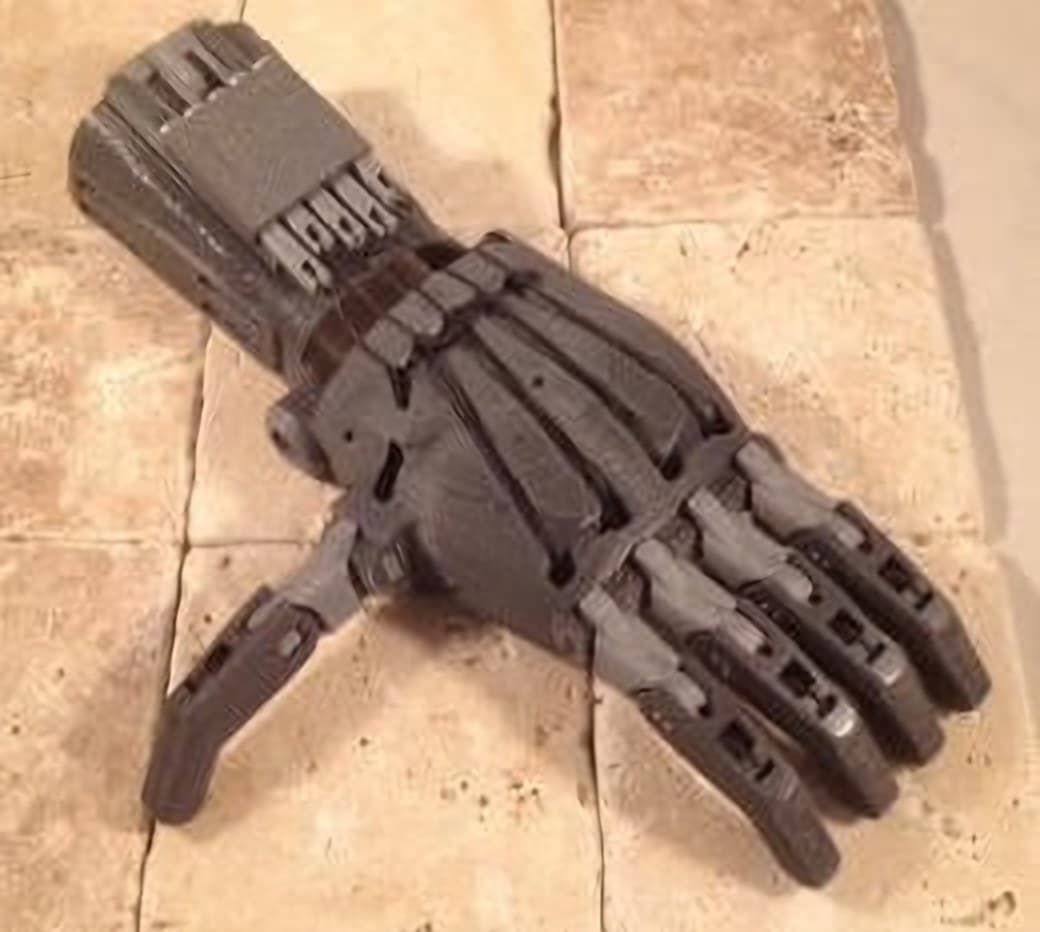

Every prosthetic hand we've sent to Uganda began as our own design, sketched and modeled from scratch rather than adapted from something already circulating online, and refined across enough rounds of printing, fitting, and reprinting that the final version looked almost nothing like where it started. A prosthetic that's going to be strapped to a kid's arm every single day has a much higher bar to clear than a prototype that only has to survive a demo, and clearing that bar took real time.
Most of that time went into details that are invisible until you're the one actually wearing the hand: how the socket sits against a wrist still years from finishing its growth, whether small fingers can close firmly enough around a cup or a pencil without the grip slipping loose, how much the whole assembly weighs, since a prosthetic heavy enough to feel like a burden simply stops getting worn no matter how well it photographs. Each of those details forced another round of adjustment, and each round meant printing the whole hand over again rather than patching a single flaw and hoping it held.
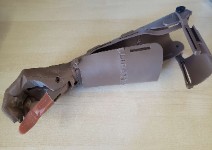 One of our 3D-printed prosthetic hand designs
The partnership that eventually got these hands to Uganda came through e-NABLE, a nonprofit network of volunteers scattered across the globe who design and print prosthetic hands for people, overwhelmingly children, who need them. e-NABLE's entire model rests on the same premise we'd already built our own design around: a functioning prosthetic hand can come from the right combination of a 3D printer and a genuinely good design, without needing a hospital, a specialist, or thousands of dollars behind it. Working with a network that size meant our design could reach kids we would otherwise have had no way of finding, let alone fitting.
Getting a finished hand from a printer in our hands to a child's arm in Uganda involves more steps than a shipping label suggests. e-NABLE's local contacts, and the people in Uganda who actually perform the fitting, checked sizing, made adjustments on-site, and followed up afterward to catch problems that a design review on our end could never have anticipated from thousands of miles away. That kind of follow-through only happens with a real, ongoing relationship with people who live where these prosthetics are actually used.
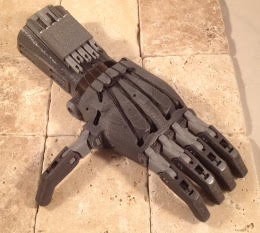 Another one of our printable prosthetic hand designs
Roughly ten of these prosthetic hands made that journey to Uganda. Ten kids, each with a hand built to be worn every day rather than displayed once and shelved. One of them is a boy named Henry, who wears his prosthetic as part of an ordinary day, reaching for the same things any hand reaches for, and who, as far as we know, is still wearing it now, months after it first arrived.
3D printing is the only reason any of this happens at the scale it does. A traditionally manufactured prosthetic can run into the thousands of dollars and take months to fit properly, a genuine barrier for a lot of families, especially for a child who's going to outgrow the device within a year or two regardless of how well it's made. Printing a hand costs a fraction of that, and when something needs to change, a size adjustment, a stronger grip, a repair for something that finally gave out, we can print a replacement instead of starting the whole process over from a blank file. It's also, in a fairly direct sense, exactly the kind of work STEM for Tomorrow exists to do: putting real engineering in front of communities that don't usually have access to it, in a form a kid can actually wear rather than just observe from a distance.
We're still in contact with e-NABLE and with the people in Uganda distributing and following up on these hands, since shipping ten prosthetics overseas is really just the start of a much longer commitment. What we're hoping for is easy enough to say and much harder to guarantee: that a year from now, Henry is still reaching for the same hand, because it still works.