
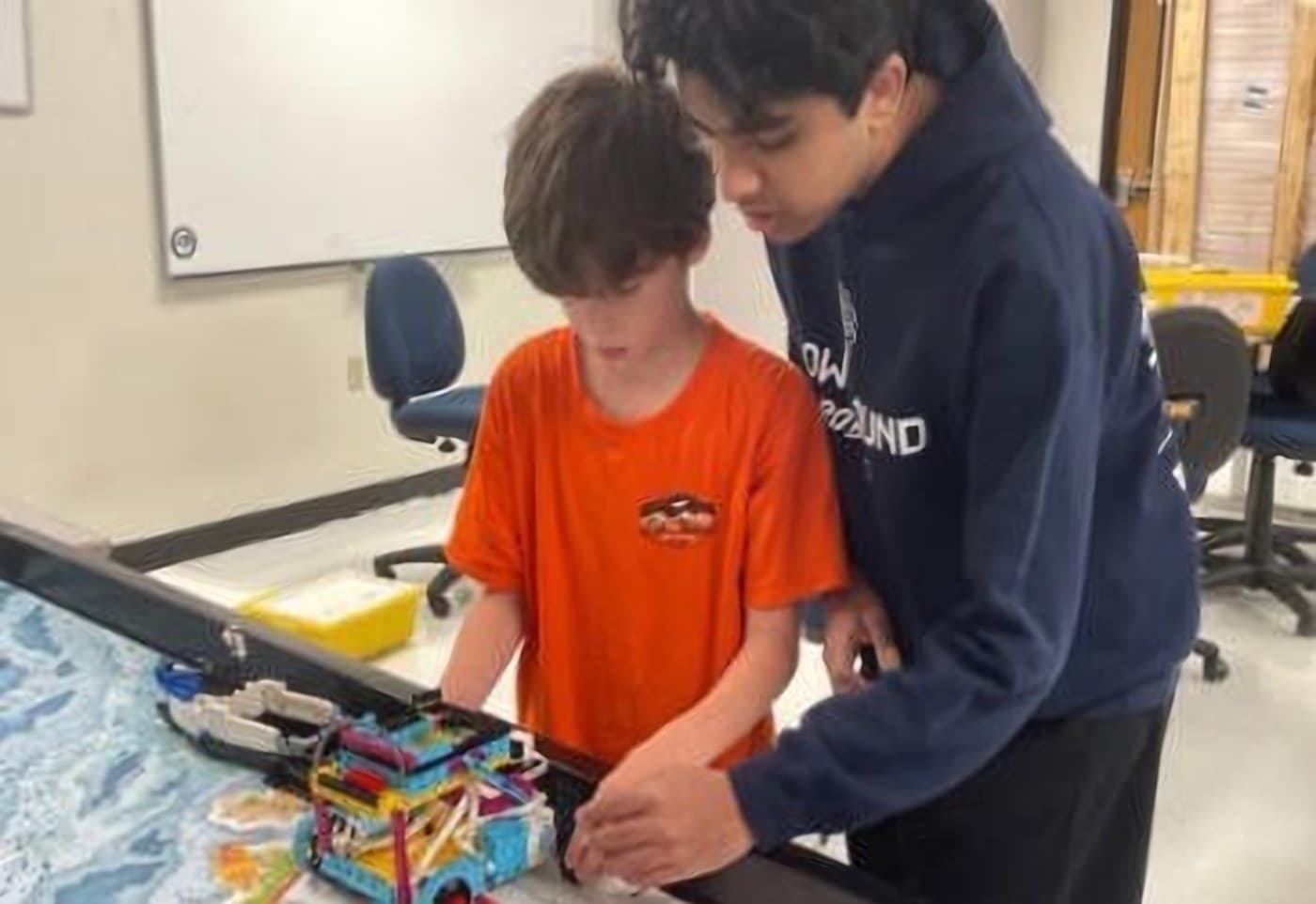

There's a certain kind of learning that no lecture can give you. Even if you explain to a student how a motor works, guide them through hundreds of lines of code, or have them study every aspect of a finished robot, there's a very high chance that they won't actually understand anything you've taught until they've gone through the process of building something themselves from scratch. In order to truly understand the concept of engineering, students need to build something, watch it fail many, many times, figure out why it isn't working, and finally, correct their mistake. This process is essential when it comes to being an engineer, because engineering isn't something you can memorize, it's something that you have to do. This belief is why we decided to start our Summer Camp initiative, and it ended up shaping every decision we made during this journey.
🛠️ How It All Started
This summer, STEM For Tomorrow partnered with the Lewisville Independent School District and Flower Mound High School's Tech Club to host a week-long robotics camp for over 40 middle schoolers who were interested in the FIRST Tech Challenge (FTC) or FIRST Robotics Competition (FRC). The counselors for this camp consisted of some of our own team members from STEM For Tomorrow as well as a group of volunteer high-schoolers from the Tech Club. Shon Slatton, the Tech Club's lead and a teacher at FMHS, was there with us throughout the week as an adult counselor.
The structure of our camp was simple. For five days, Monday through Friday, the campers spent eight hours a day in the FMHS robotics lab. The first half of the day would involve the counselors giving the students lessons about CAD and programming fundamentals using OnShape for CAD and Android Studio for programming. After that, the campers had the rest of the day to actually build by themselves.
That "rest of the day" was the thing that mattered the most. Our goal with this initiative was to be as hands-off as we possibly could.
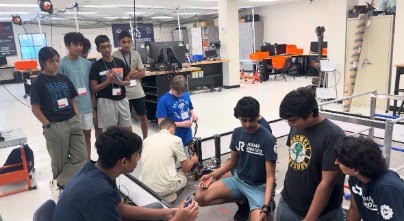 Some of our 40+ campers and mentors midweek in the FMHS robotics lab
👀 Stepping Back
We split the 40 campers into five teams, put two counselors on each, and gave every team the same assignment of building a robot from the ground up. The counselors handled the more dangerous or advanced steps, but other than that, we let the kids work independently among themselves. We wanted to ensure that we only guided the kids and didn't just do everything for them.
However, if you're watching a middle schooler struggle with a problem you could solve in thirty seconds, it's very tempting to want to reach over and fix it yourself. There were plenty of moments where a counselor had to sit on their hands and bite their tongue while a team went down a path we knew wouldn't work. But if we'd given in to the urge and solved their problems for them, we'd have taken the most important part of the engineering process from the kids (and if we solved every problem, it definitely would've been a waste of money for the parents).
A memorable example for us was when one team hit a wall with their programming midway through the week. Their robot just wouldn't respond the way they wanted it to, and after trying and failing a few times, the kids became really frustrated. We gave them a nudge here and there, like a question to think about rather than an answer to copy. And then, after a few more tries, they got it. Watching the look on their faces when they realized a small tweak actually worked, with barely any help from us, was worth every second we'd spent holding back.
🏁 The Final Day
On the last day, we held a competition for all five teams. We gave the teams a simple task of picking up blocks, called samples, from an FTC field and moving them to their team's side. The catch was that teams couldn't just push the blocks across, so every robot needed some kind of claw or intake mechanism to actually grab them. On top of that, they could only carry three blocks at a time, which forced the kids to think about efficiency, not just capability.
We won't pretend every robot ran flawlessly. But here's the part we're proudest of: on the final day, every single robot worked, and every single team got to compete. Forty middle schoolers who, five days earlier, may have never touched CAD or written a line of code had each helped build a functioning robot capable of completing a real task. That is something that we at STEM For Tomorrow are very proud of.
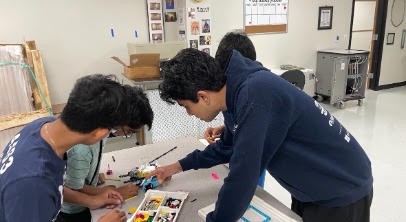
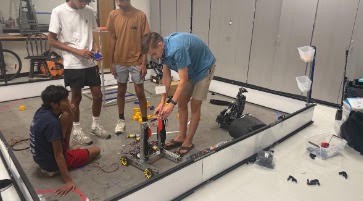
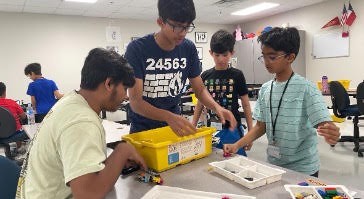
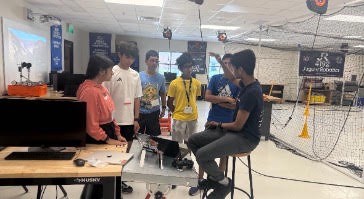
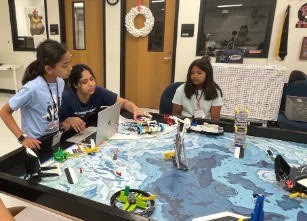
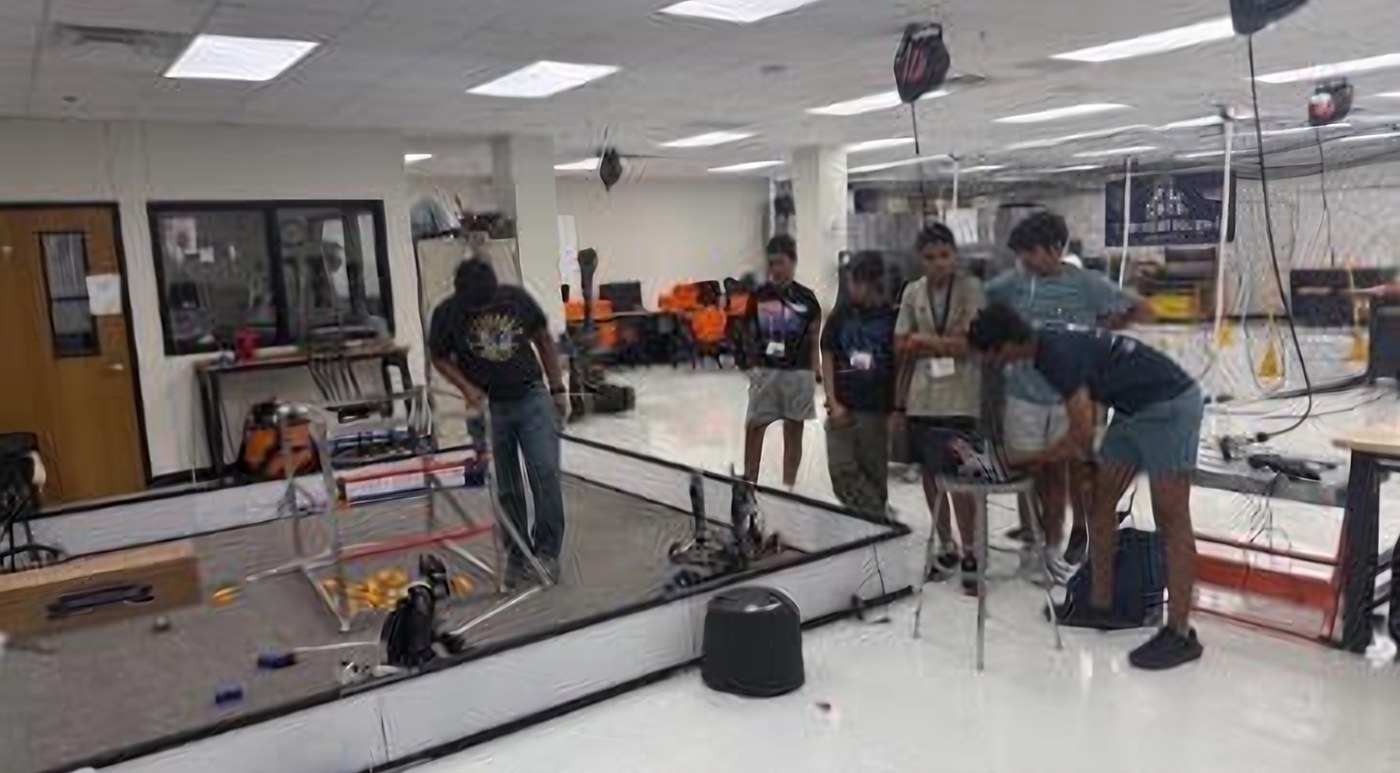 More moments from the week
🚀 More Than a Camp
It would make sense to measure the success of our camp by how well the robots functioned at the end, but that isn't the real reason why we wanted to host our camp. What we really cared about was how every camper changed after experiencing what it is like to be a real engineer. By the end of the camp, they were able to think like engineers instead of blindly following instructions. They were able to think of solutions to a problem, test them, and if it didn't work, they tried something else.
That kind of understanding is something a student carries into their first real robotics team, their first engineering class, and maybe their first job someday.
✨ Conclusion
We went into this summer wanting to teach robotics. What we actually got to do was watch a room full of middle schoolers teach themselves, with us just close enough to help when it mattered.
We don't know which of these campers will go on to join an FTC or FRC team, or which one will look back years from now and point to this week as the moment engineering finally clicked. But we do know that 40 kids left the robotics lab that Friday having experienced what being an engineer is all about.