
For many students, robotics is more than just building machines. It teaches teamwork, problem-solving, communication, creativity, and perseverance. These are skills that extend far beyond school competitions, often shaping future career pathways. Yet despite these benefits, robotics often feels insignificant to most people, especially in a school environment. After all, robotics programs are available to students in the majority of public high schools in our nonprofit's local area, the DFW metroplex. Because these opportunities are so common, it's easy to assume that every student has equal access to them. However, there is a disparity in access to robotics that most people never even notice, faced by a community that is often completely overlooked in the world of STEM.
🌱 How It All Began
Many of us here at Stem for Tomorrow started off our robotics journey as students interested in bridging different fields of STEM, one of robotics' specialties. All it took was a bit of paperwork and paying the fees, and we had joined FIRST Robotics. As competition seasons progressed and many of us focused on outreach, we began to notice that robotics was often inaccessible to those around us.
In many places in Texas alone, certain students were unable to get involved in robotics without a clear pathway in. There wasn't a lack of interest, but rather a lack of opportunity.
The community we previously mentioned as being largely overlooked in STEM was our school's special education department. People have often not considered robotics as something that disabled and neurodivergent students can take part in. Opportunities to extend inclusivity in robotics to our special education department had completely slipped the minds of our school district, in the same way it had slipped ours before we engaged in outreach.
One of our core principles is empowering the next generation, regardless of our differences. Because of that, we knew we had to advocate for expanded access to robotics for all special education departments—not just in our school, but across our entire school district (and eventually, the world, though that's more of a long-term goal).
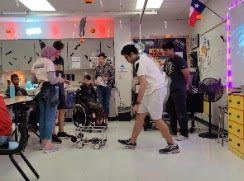 Mentoring twice a week during lunch
🤝 Advocacy and Collaboration
The Lewisville Independent School District was overjoyed to hear about our cause and offered their full support. We immediately got to work figuring out how to make this happen. That's when we discovered FIRST® Access, a program that "opens the door for students with disabilities and special needs to take part in STEM through hands-on robotics." It focuses on creating accessible pathways where students can grow and develop through robotics.
Under the guidance of FIRST Access Program Leader Erika Diggs, we advocated for the creation of several FIRST Access robotics teams in our district. We wanted neurodivergent students to not just learn robotics, but also have opportunities to participate in actual competitions against other FIRST Access teams.
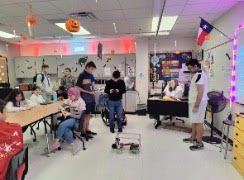 Showing off the robots at one of our sessions
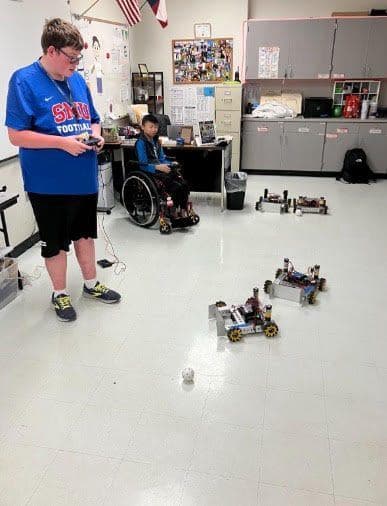
While these teams were being developed, we worked with our school's special education teacher, Mrs. McMinimy, to mentor neurodivergent students at our school. Twice a week during lunch, we went down to her room to showcase robots, demonstrate driving, and help students learn.
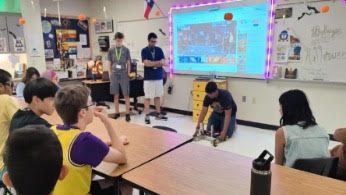 Walking students through a driving demo on screen
At first, we struggled to explain complex concepts efficiently without overcomplicating things, and we began to feel like these biweekly meetings weren't as productive as we had hoped. That's when we realized we needed outside help.
We reached out to professors like Dr. Schneider from UCLA and Dr. Fragale from UT Austin, who have experience working with individuals with developmental disabilities. One piece of advice stood out: the use of visual aids.
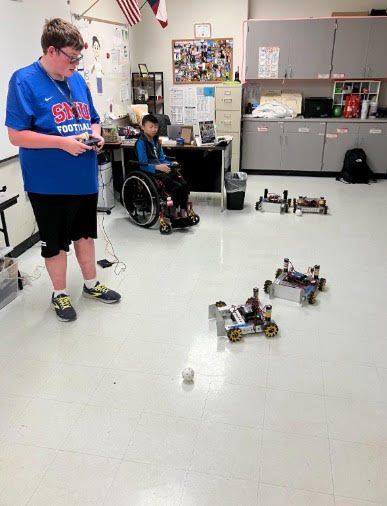 Letting a student drive a robot one-on-one
We had previously relied mostly on verbal explanations and pointing at robots. But once we started heavily using visual aids, the difference was immediate. Concepts became easier to grasp, and leaving visuals behind for staff to reinforce when we weren't there helped significantly.
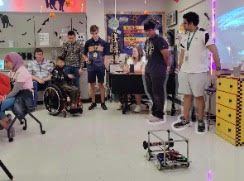 A student taking the controller for the first time
🌟 More Than Robotics
We love robotics; that much is clear by now. However, we see the FIRST Access initiative as far more than just building robots. It is about making sure every student, regardless of background, feels included in the sense of belonging and the wide range of experiences that come with building and working with robots.
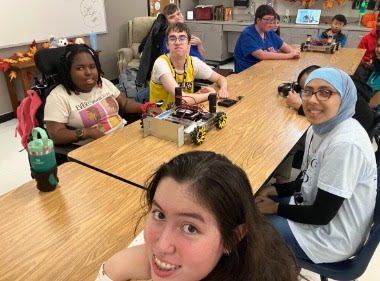 Watching the robots move together as a group
Part of that vision was inspired by our nonprofit's founder, whose family includes a member with autism. Growing up, he saw firsthand how neurodivergent individuals were often overlooked in STEM and realized the barrier was never ability or interest, but access.
His experience inspired Stem for Tomorrow to dedicate time and effort toward building an inclusive environment where students can discover their own potential without being limited by assumptions or societal expectations.
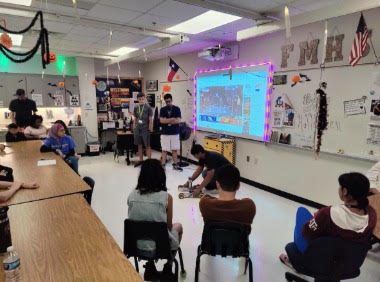 Explaining how the robot works before a session
As the weeks went by, we saw the impact extend beyond technical skills. Students became more engaged week after week, collaborating with peers and improving their ability to participate in challenging robot tasks. Watching their confidence grow over time was, by far, the most rewarding part of the project.
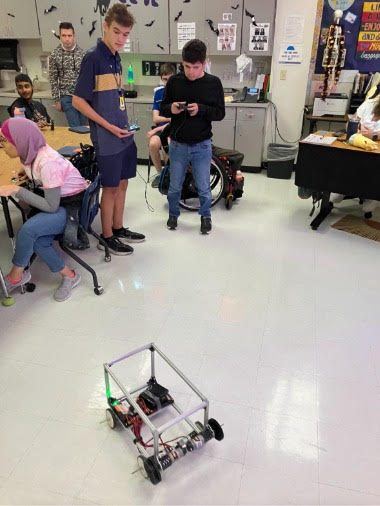 A student and mentor driving robots side by side
✨ Conclusion
We can't end this blog post without our biggest flex of the whole project. The greatest measure of success wasn't any of the technical results we saw at the end of the year—it was getting the opportunity to hear directly from the students themselves.
Reading their thoughts and feelings about robotics, seeing their excitement, and watching them grow more confident with each session reminded us why this work matters in the first place. In the end, it was never just about robotics. It was about giving students a space where they could explore, build, and feel proud of what they created.