
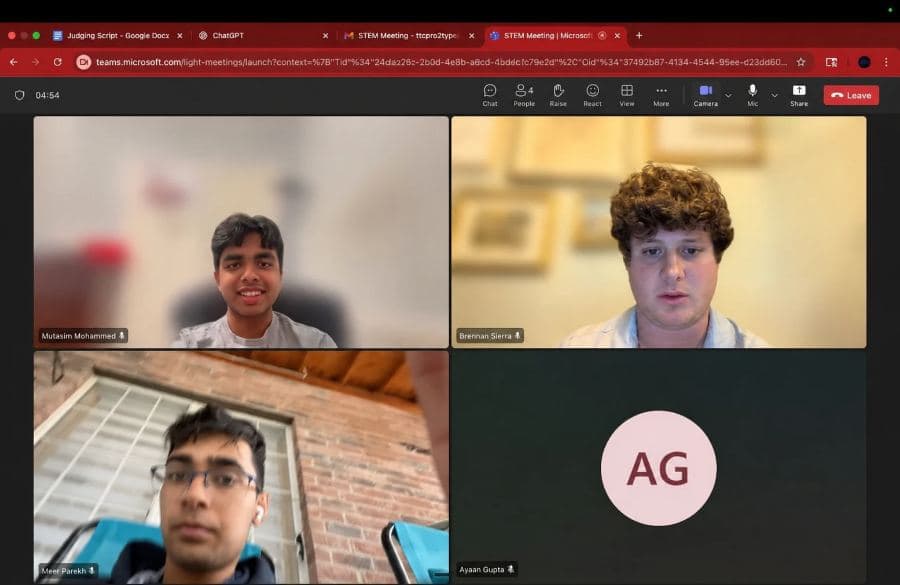

For the last few months, STEM for Tomorrow has attempted to expand our reach to accomplish more than we've ever been able to before. Our staff recently met with Congressman Brandon Gill, who represents Texas's 26th District, and State Senator Tan Parker, both of whom are policymakers. The meetings gave us an opportunity to think more critically about the work that we do, and discuss the potential to broaden our reach and impact.
Many people that volunteer in different school districts across North Texas know firsthand how unequal access to advanced STEM classes can be. While some schools have access to robotics clubs, AP Computer Science classes, and engineering courses as early as their freshman year, others simply don't have the resources to offer these programs.
This isn't unique to Flower Mound or even DFW. It's a state issue, and a national issue. It would be beneficial to the country to provide all students with access to STEM programs such as computer science, engineering, and applied sciences so that there will be a steady stream of professionals working to advance those fields.
Our meeting with Representative Gill began by stating clearly the issue we've long identified: STEM education is underrepresented in lower income school districts in Texas as well as nationwide, and a major contributing factor is the limited number of STEM classes available to students. While it is easy to say that STEM education is important, what good is a statement without action? What good is it if a school doesn't have the ability to offer those classes? Students won't know if they are interested in STEM if they're never given the opportunity to explore it.
Representative Gill seemed to be very open to our concerns and stated that he does indeed believe in the importance of STEM education for the future workforce of America. He didn't simply nod at us politely before moving on with the interview; instead he requested that we keep in contact with his office to perhaps discuss drafting a bill to increase STEM availability in schools. This is a larger request than we expected, however this is precisely the sort of action we had hoped for. A federal representative taking the interests of students seriously enough to begin the process of creating a bill to help is not common, and we are currently using this amazing opportunity to the best of our ability.
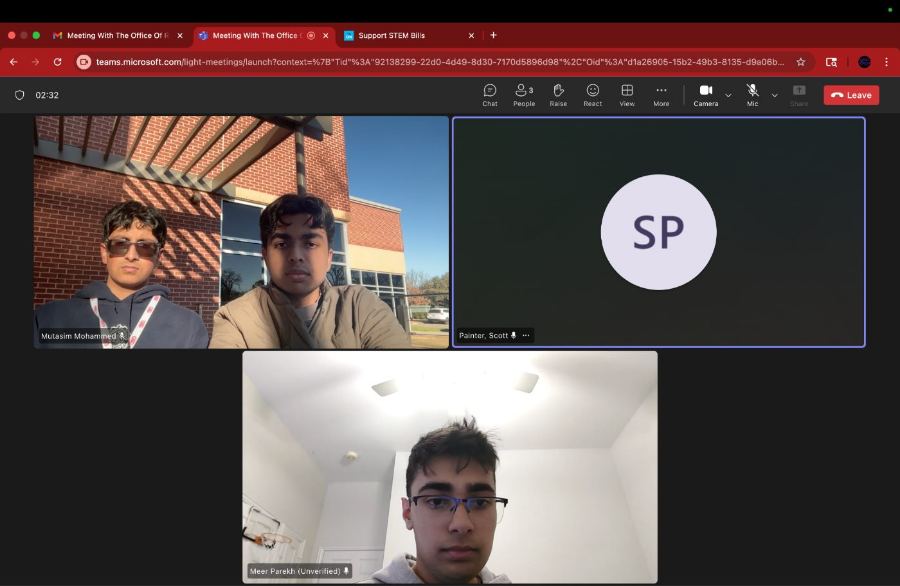 Meeting with the office of Congressman Brandon Gill
We met with State Senator Tan Parker as well, as many decisions regarding school funding and school curriculum are made at the state level. Texas determines a large portion of what schools are required and funded to provide, so in order for us to make a difference in the long run, we need to include our state representatives in the discussion.
Senator Parker's answer reflected much of what we'd heard from Congressman Gill, as he sees the problem and understands the impact it could have on the future workforce in Texas. It was comforting to hear two separate legislators acknowledge that this is a real issue, rather than a problem that we'd simply identified in some schools we were familiar with.
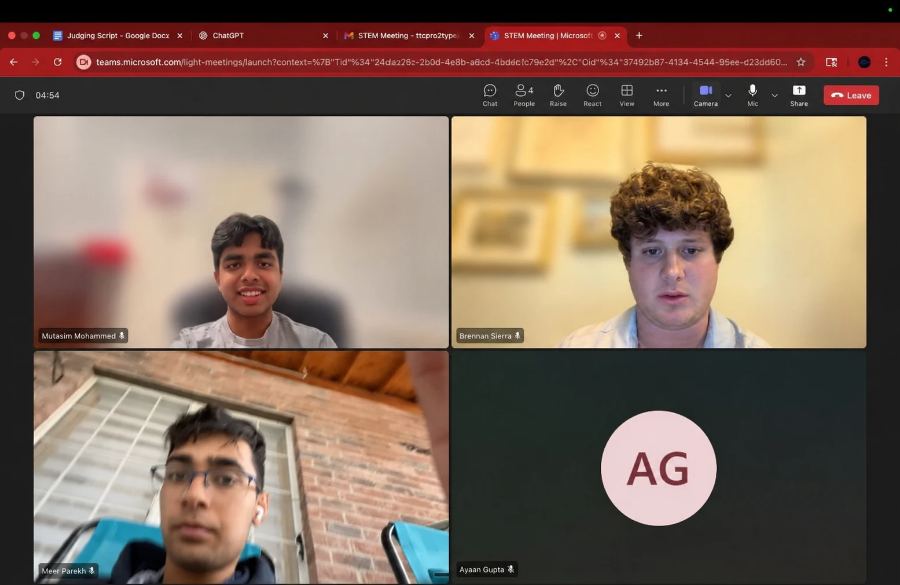 Our STEM meeting with legislative staff
At first glance, these meetings may seem like another talking point to add to our resumes or a good PR opportunity. However, our long term vision is not to simply talk, but to act. STEM For Tomorrow was originally founded as a mentoring and outreach program, and it remains as such, but through interactions like these, we hope to move into the policy making space and try to address the root of the problem rather than fill in the gaps that currently exist.
There are many factors behind why so many STEM programs are underfunded, including inadequate budgets, staffing issues, and curriculum standards that don't reflect the needs of today's labor market. Legislation moves slowly, and there is no guarantee that any of these discussions will lead to actual bills being drafted, but we believe that even one discussion is worth the effort. The fact that two legislators have voiced their support for addressing this problem indicates a positive step forward.
We intend to follow up with Congressman Gill's office, and we plan to do the leg work required to formulate a proposal. This includes researching the current policies surrounding STEM programs and studying how other states have addressed this issue. We also aim to determine which aspects of our plan are feasible at the federal level versus state level, and we hope to return with a concrete proposal rather than just a general idea.
We'll continue to share any new developments. For our part, the only certainty the meetings yielded was that the folks tasked with fixing broken systems are not as far out of reach as we'd assumed; you have to request a meeting.